What To Do
I am being threatened right now
What To Do and What Not To Do
Five Actions Right Now
- Do not pay or negotiate before speaking with police or victim services. Payment often leads to more demands.
- Do not reply. Silence is safer than engagement.
- Screenshot/save everything. Evidence matters.
- Tell one trusted person. Isolation is their weapon.
- Report using the correct pathway. See options below.
Quick Decision Guide
→ Call 911 immediately
→ Save evidence, stop responding, call local police non-emergency or the Surrey Extortion Tip Line
→ Call VictimLink first. Trained, confidential, 24/7, 240+ languages.
No long explanation. No scrolling. These five actions first.
How Extortion Works — And How to Respond
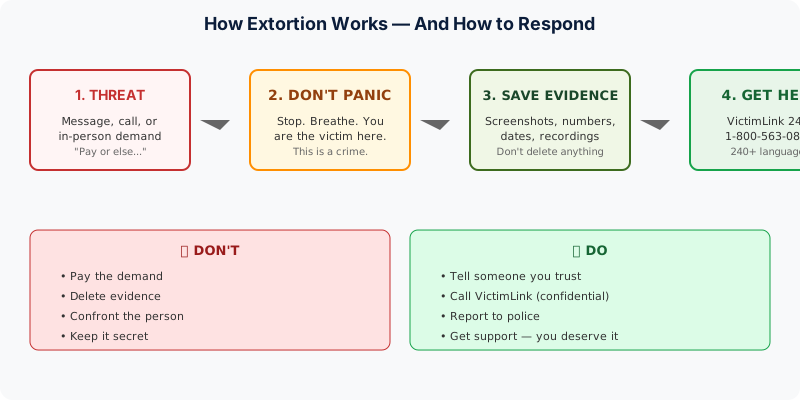
Step 1: Pause. Do not pay.
Paying rarely stops extortion — it often leads to more demands.
Take a breath. You have options. The next steps will help you protect yourself.
Step 2: Do not delete anything
Messages, emails, screenshots, voicemails, and call logs are evidence. Even if the content is embarrassing or distressing, do not delete it.
You don’t need to look at it right now. Just don’t erase it.
Step 3: Stop responding to the extortionist
You do not need to reply. Continued contact often escalates threats.
If they contact you again, document it (screenshot, save) but do not engage.
Step 4: Secure your accounts
If they’ve shown access to your accounts or personal information:
- Change passwords on email, social media, and financial accounts
- Enable two-factor authentication (2FA) where available
- Check for unfamiliar logins or connected devices
- Review recent account activity
Act quickly — before they can lock you out.
Step 5: Tell someone you trust
Extortion thrives on isolation and shame. Telling one trusted person — a friend, family member, counselor, or community leader — reduces the extortionist’s power over you.
You don’t have to share every detail. Even saying “I’m dealing with a difficult situation and need support” is enough.
A note on family and community
You understand that in many South Asian families, certain topics carry cultural stigma. You may fear disappointing your family or damaging your reputation.
Remember:
- You are a victim of a crime — not a wrongdoer
- Extortionists deliberately exploit shame and family expectations
- Many people fear the worst reaction from family; in practice, support is often possible when the conversation is handled calmly and safely.
- Professional counselors can help you decide how and when to talk to family
Step 6: Report it
Reporting helps protect you and others. Every report helps police connect cases, identify patterns, and stop extortionists.
In British Columbia
If in immediate danger: Call 911
To report (non-emergency):
| Community | Police Non-Emergency | Tip Line / Victim Services |
|---|---|---|
| Surrey | 604-599-0502 | Extortion Tip Line: 236-485-5149 |
| Abbotsford | 604-859-5225 | Victim Services: 604-864-4757 |
| Delta | 604-946-4411 | Victim Services: 604-940-5019 |
| Langley | 604-532-3200 | Victim Services: 604-532-3214 |
Anonymous tips: BC Crime Stoppers: 1-800-222-8477
National reporting: Canadian Anti-Fraud Centre: 1-888-495-8501
You do not have to share content you find embarrassing. Focus on: what happened, when, and how they contacted you.
Step 7: Get support
This is stressful. It’s normal to feel scared, ashamed, angry, or overwhelmed. You don’t have to handle this alone.
VictimLink BC — Free, confidential, 24/7
Call or text: 1-800-563-0808
- Available in 240+ languages including Punjabi, Hindi, Français
- Trained victim service workers provide safety planning, emotional support, and help navigating the system
Financial assistance for victims
The Crime Victim Assistance Program may cover:
- Counselling services
- Security upgrades (up to $3,000 for locks, cameras, security systems — verify current limits; figure dated June 2026)
- Relocation expenses in certain circumstances
| Call: 1-866-660-3888 (press 5) | Monday–Friday, 8:30am–4:30pm |
Source: BC Crime Victim Assistance Program · Verify current limits as programs change.
What NOT to do
❌ Don't pay the demand
Payment usually leads to more demands, not safety.
❌ Don't retaliate or threaten back
This escalates danger and creates legal risk for you.
❌ Don't try to identify or track the extortionist
Leave investigation to authorities — amateur efforts can compromise cases.
❌ Don't delete evidence
Even distressing content may be needed for investigation.
❌ Don't suffer in silence
Isolation is the extortionist's greatest tool.
I Already Paid — What To Do Now
If you have already paid an extortion demand, stop now. Do not send further payments.
Immediate steps:
- Document the payment(s) — Screenshot transfer confirmations, receipt numbers, dates, amounts
- Contact your bank immediately — Report fraud. They may freeze accounts, reverse transfers, or guide you through recovery
- Call the Canadian Anti-Fraud Centre — 1-888-495-8501 (national fraud reporting)
- Apply for Crime Victim Assistance — CVAP may cover counselling, security upgrades (up to $3,000 — verify current limits), and relocation expenses. 1-866-660-3888 (press 5)
- Report to police — Even if you paid, reporting helps connect cases and protect others
→ Full Financial Support Guide
I Just Received a Threat
Follow the seven steps above. Key priority: Do not reply. Save everything. Call VictimLink if you need to talk before reporting.
They Demanded Money
This is the standard extortion pattern. Do not pay. Follow Step 1 (Pause) through Step 7 (Get support) above. The financial recovery section (#already-paid) applies if you already sent money.
They Used WhatsApp
WhatsApp is a common extortion channel. Do not reply. Screenshot the chat, including the sender’s profile. Forward to police as evidence. See the Digital Security Guide for securing your accounts.
They Contacted My Business
See the For Businesses page for employee safety protocols, evidence preservation, and reporting procedures specific to workplaces.
Remember
- Extortion is a crime. You are the victim, not the wrongdoer.
- Shame is their weapon. Naming what’s happening takes power back.
- Help exists. Police, victim services, and community organizations are ready to support you.
- You are not alone. This is happening to many people. There is no shame in seeking help.
This page in other languages
Still unsure what to do?
Contact VictimLink BC at 1-800-563-0808 — free, confidential, 24/7, in your languages.
Reviewed for: victim-support accuracy, public-safety consistency, cultural-language clarity
Last reviewed: June 2026 · Next review: September 2026
This is educational, not legal advice. For case-specific guidance, consult a lawyer or contact VictimLink.